By Charlie DeFelice, Founder of Viking Marketing. Charlie founded Viking Marketing in Chandler, AZ, and has spent years helping local service businesses figure out when a free tool is enough and when it isn't.
TL;DR: Free AI appointment setter tools genuinely exist and can work for very early-stage or extremely low-volume businesses, but nearly all of them come with real limits: usage caps, limited channels, or missing features that surface once a business starts growing. Genuinely permanent free access is rarer than vendor marketing suggests. Of the five commonly recommended tools this guide checked directly against their own pricing pages, only one turned out to have a true free-forever tier. This guide breaks down what free tools actually offer, names real examples with verified terms, and covers when it makes sense to move to a paid platform built for your business. For the full picture on paid options once you get there, see our scored comparison of nine AI appointment setter platforms.
Search "free AI appointment setter" and the results split into two honest categories: genuinely free tools with real limitations, and free trials of paid products designed to convert you into a paying customer once you are hooked. Both are legitimate, but confusing the two leads to frustration down the line.
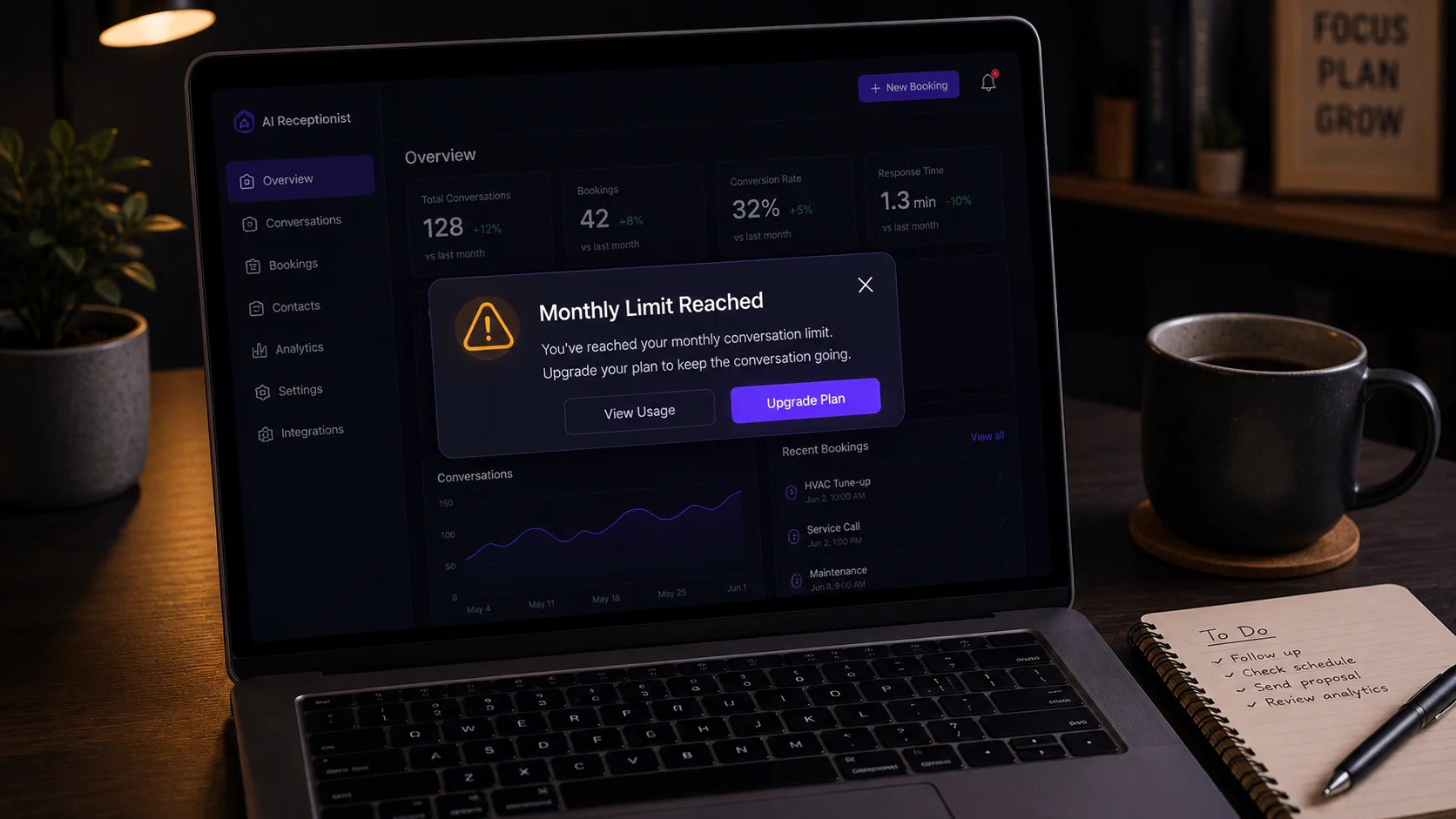
A salon owner I worked with signed up for a free chat-based scheduling tool. She ran a Google ads push that tripled her inquiry volume for two weeks, and didn't realize she'd hit the tool's monthly conversation cap until a client mentioned she never got a reply. The tool had quietly stopped responding to new conversations three days earlier. That is the exact moment this guide is meant to help you avoid, so you know exactly what you are getting before you build your booking process around it.
What "Free" Actually Means in This Category
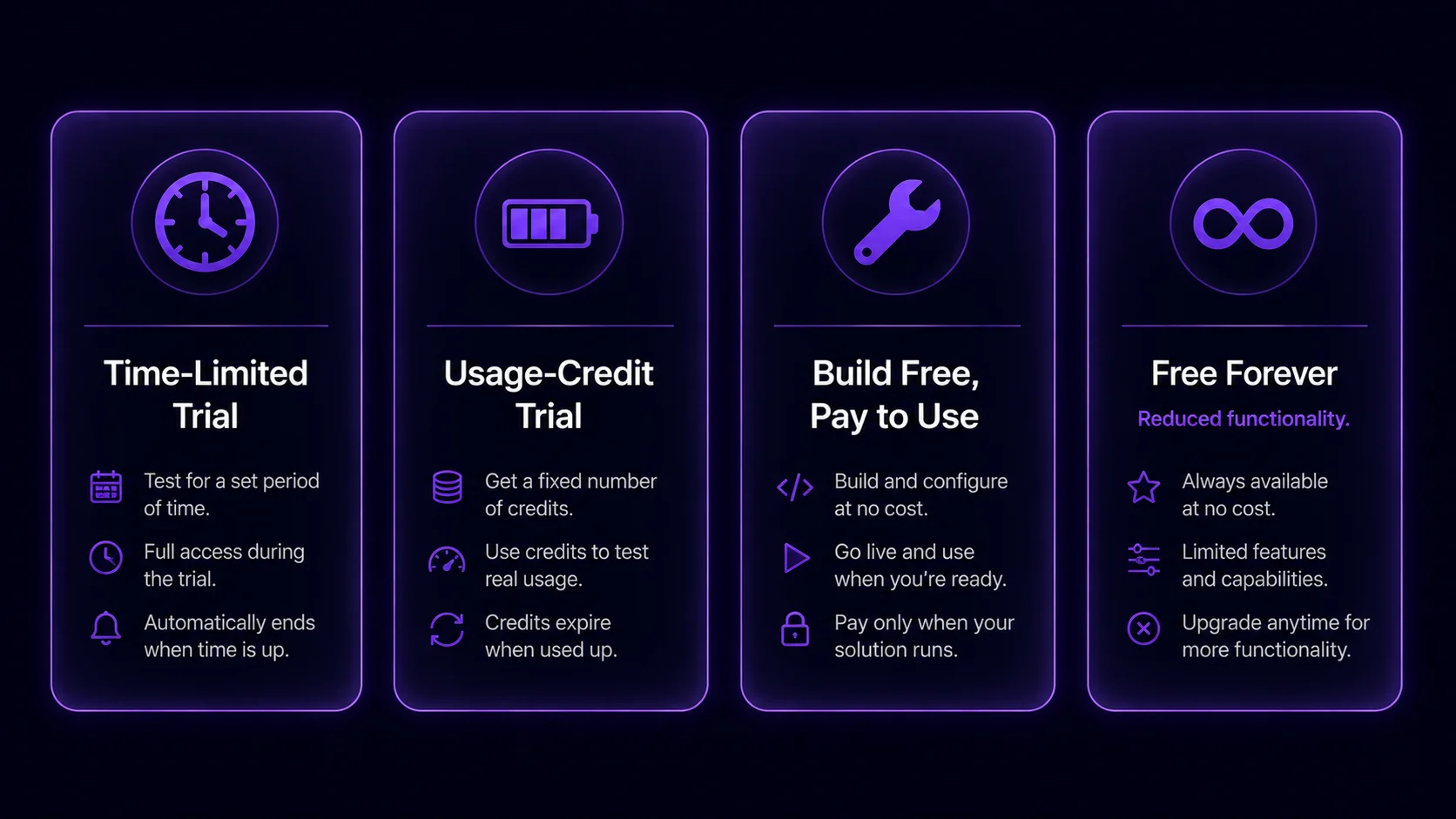
When a tool advertises itself as free, it almost always means one of two things: a trial designed to convert you to a paid plan, or a permanently free tier that works but leaves out real functionality. Genuinely permanent free access with no strings attached is rarer than it looks, and worth being skeptical of when a vendor's marketing implies otherwise. We checked five commonly recommended tools directly against their own pricing pages to see which claim actually held up.
Custom HTML/CSS/JavaScript
Time-limited and usage-based trials. Dialzara offers a 7-day free trial on its paid plans rather than a permanent free tier, its cheapest paid plan starts at $29 a month for 60 minutes of call time. Retell AI takes a different approach: a $10 free credit with no expiration clock, good for roughly 67 to 90 minutes of usage depending on configuration, with full platform access and no deadline pressuring you to convert. Synthflow lets you build and design a voice agent for free with no stated time limit, but the moment you launch it and start placing real calls, billing switches to pay-as-you-go. All three are legitimate ways to evaluate a platform before paying, and free trials across software broadly convert a minority of users to paid even when no card is required upfront, ChartMogul's 2026 SaaS Conversion Report puts a strong free-trial conversion rate at 10 to 15%. None of these three is a permanently free tool, they're sales funnels with different mechanics, which is a completely reasonable business model but worth recognizing for what it is.
Free forever, with reduced functionality. ManyChat is the clearest example among these five of a tool that stays free indefinitely instead of converting you to paid. Its free tier covers 25 active contacts across two channels, Instagram and Facebook Messenger, with basic chat-based booking prompts, genuinely useful for a narrow use case. What it does not do, on any plan, free or paid, is handle voice calls at all, and CRM integrations along with deeper automation are reserved for its Business tier. The free version works, but only within a use case narrow enough that most growing businesses outgrow it fast.
A word of caution on vendor claims. Some tools that show up in "free AI receptionist" roundups don't hold up once you check the vendor's own site. AIRA, a voice AI receptionist product at getaira.io, is a case in point: despite appearing in some third-party lists as a free option, its own pricing page lists no free tier or trial of any kind, its cheapest plan starts at $24.95 a month for 30 calls. Always verify a "free" claim against the vendor's own pricing page before building a plan around it, not a blog post, including this one.
None of these access types is inherently bad. The problem arises when a business builds its actual booking process around a free tool without understanding which of these it's actually getting, and gets surprised later when a limit is hit at an inconvenient moment, the way it did for the salon owner above.
What Free AI Appointment Setter Tools Do Well
Testing the Concept Before Spending Money
For a genuinely early-stage business, testing whether AI appointment setting is even the right fit before investing money, free tools serve a real purpose. They let you experience the core mechanics, a customer message coming in, the system asking a qualifying question, a calendar slot getting confirmed, without any financial commitment.
Covering Very Low Volume
They also work reasonably well for extremely low-volume situations. A business booking a handful of appointments a month is unlikely to hit a usage cap that a free tier imposes, and may never need to upgrade at all if volume stays that low.
Evaluating Fit Before Committing
Free trials specifically are useful for evaluating whether a particular platform's conversation style, setup process, and interface actually fit how your business operates, before signing up for a paid plan.
Where Free Tools Fall Short
The limitations tend to surface in four specific places, and they matter most for exactly the businesses trying to grow.
Usage Caps Hit Right When Growth Happens
A free tier built around 50 conversations a month feels generous when a business is booking ten appointments monthly. It becomes a real constraint the moment marketing efforts start working and inquiry volume increases, often the worst possible time to suddenly lose access to your booking system, exactly as happened with the salon example above.
Missing Channels Create Blind Spots
Many free tiers restrict which channels are covered, offering chat only, or SMS only, while leaving voice calls or other channels unsupported. If a meaningful share of your customers still call rather than text, a free tool that only handles chat leaves a real gap.
Limited Integration and Support
Free tiers frequently lack integration with a business's existing calendar, CRM, or invoicing system, and support is often limited to documentation rather than direct help when something goes wrong. Most free tiers do not connect to Google Calendar or Outlook natively, requiring manual workarounds that paid platforms handle automatically. For a business that depends on scheduling working correctly every single day, that lack of support becomes a real risk.
No Compliance Guardrails Built In
TCPA litigation surged 95% in 2025, and free tiers rarely include the guardrails a paid platform builds in by default. If a free tool lets you configure outbound texting to a purchased list without any warning about consent requirements, that is a legal risk hiding behind a free price tag.
What to Look for in a Free AI Appointment Scheduling Tool
Before relying on any free tool, confirm four things directly with the vendor rather than assuming.
Which access type it actually is. A time-limited trial, a usage-credit trial, free-to-build-but-pay-to-use, or a permanently free but limited tier. The vendor's pricing page should say this plainly, if it doesn't, or if the "free" claim only shows up in third-party roundups rather than the vendor's own site, treat that as a red flag and ask directly.
Whether it requires a credit card upfront. Some "free" tools require card details immediately, which usually signals a trial that auto-converts to paid rather than a genuinely free tier. Read the fine print before entering payment information for something advertised as free.
Which channels are actually covered. Confirm phone, SMS, and web chat coverage specifically rather than assuming a "free AI receptionist" covers all three.
Whether it connects to your calendar. A free tool that cannot sync with Google Calendar or Outlook creates manual work that offsets much of the time savings the tool is supposed to provide.
If you want to see what missed bookings on an unsupported channel or a hit usage cap are actually costing you, Viking Marketing's free missed call ROI calculator runs the numbers in under two minutes, no signup required.
How to Know When You Have Outgrown a Free Tool
There are a few clear signals that a free AI appointment setter tool has stopped fitting your business, regardless of how well it worked when you started.
You Are Regularly Hitting a Monthly Usage Cap
If you are regularly hitting a monthly usage cap before the month ends, that is the clearest sign the free tier no longer matches your actual volume.
Customers Are Reaching Out Through Unsupported Channels
If customers are reaching out through a channel your free tool does not support, phone calls in particular, you are likely losing bookings you never even see reflected in the data.
You Need Support Beyond Documentation
If you find yourself needing direct support to resolve an issue and only have access to generic documentation, that gap becomes a real liability once your booking system is handling meaningful revenue.
None of these signals mean the free tool was a bad choice initially. They simply mean the business has grown past what a free tier was ever designed to handle.
What Does It Cost to Upgrade From a Free Tool?
Once a business outgrows a free tier, purpose-built paid platforms for local service businesses typically start at $65 to $297 per month, scaling to $997 per month for full multi-channel coverage with dedicated onboarding. Setup usually takes days, not weeks, similar to the setup time for most free tools. Upgrading does not mean starting over from scratch or facing a long implementation delay. Viking Marketing's Starter plan is $297 per month, covering the channel gaps and support limitations most free tiers hit first: full phone, SMS, and web chat coverage, plus direct support rather than documentation alone.
Compare that to the hidden cost of staying on a free tier too long: a single missed booking on an unsupported channel, one customer who called instead of texting and got no answer, often costs more in lost revenue than a month of paid service. For a full breakdown of what "purpose-built" actually means and how it differs from enterprise or personal productivity tools, see our guide on AI booking systems for small business. And when you're ready to compare specific paid platforms side by side, our scored comparison of nine AI appointment setter tools breaks down setup speed, pricing, and channel coverage for each.
Key Benefits of Starting With a Free Tool (When It Fits)
Zero financial risk while testing whether AI appointment setting fits your business
A realistic feel for how the technology actually works before committing
Enough capacity for genuinely low-volume, early-stage businesses
A useful way to compare interface and setup experience across a few platforms before choosing
How Viking Marketing Approaches This
Viking Marketing's AI appointment setter is built for local service businesses that are past the very early testing phase and need a system that actually holds up as call and booking volume grows, with full channel coverage across phone, SMS, and web chat rather than a limited free tier.
When a call goes unanswered, Viking's missed call text back feature responds immediately, and every conversation flows into Viking's all-in-one inbox, with real support available rather than documentation alone. If you are weighing a fully automated system against keeping a person involved, our AI receptionist vs human receptionist guide covers that tradeoff directly. And if you're still getting oriented on what this whole category of tool actually is before comparing options, What Is an AI Appointment Setter? is the right place to start.
Viking Marketing holds a 5.0-star Google rating across 21 reviews, with plans starting at $297 per month.
If you are still in the very early testing phase, a free tool may genuinely be the right starting point. If you are past that point and growth is starting to expose the limits, it is worth a conversation before those limits start costing you actual bookings.
Want an honest read on where your business actually sits? Book a free 15-minute call and we will tell you directly, including if a free tool is still the right fit for now.
Key Facts: Free AI Appointment Setter Tools
Genuinely permanent free access is rare in this category. Of five commonly recommended tools checked directly against their own pricing pages, only ManyChat's free tier is actually permanent, and it's chat-only with no voice on any plan.
Dialzara and Retell AI offer trials, not permanent free tiers: Dialzara's converts to paid after 7 days, Retell AI's runs on a $10 usage credit with no expiration date. Synthflow is free to build but switches to pay-as-you-go the moment you place a real call.
Some vendors marketed in "free" roundups, like AIRA (getaira.io), turn out to have no free tier or trial at all on their own pricing page, worth verifying directly before trusting a third-party list.
Usage caps on free tiers most often become a problem exactly when a business is growing, since that is when inquiry volume increases fastest.
Many free tiers restrict which communication channels are covered, which can leave a real gap if customers still frequently call rather than text.
Most free tiers do not connect natively to Google Calendar or Outlook, unlike purpose-built paid platforms.
Companies responding to a lead within one hour are seven times more likely to have a meaningful conversation with a decision-maker than those that respond later, according to Harvard Business Review. Channel gaps in free tools can directly undermine that response-time advantage.
TCPA litigation surged 95% in 2025. Free tiers rarely include built-in compliance guardrails for outbound texting.
Paid platforms built for local service businesses generally start at $65 to $297 per month once a free tier is outgrown, with setup usually measured in days, similar to free-tier setup time.
Regularly hitting a monthly usage cap, missing channel coverage, or needing support beyond documentation are all clear signs a business has outgrown a free tier.
Viking Marketing holds a 5.0-star Google rating across 21 reviews as of July 2026.
Frequently Asked Questions
Are free AI appointment setter tools actually free, or is there a catch?
It depends on the specific tool. Some offer a permanently free tier that leaves out real functionality, others offer a free trial, whether time-limited or usage-credit-based, designed to convert you to a paid plan. None of these are dishonest, but it is worth confirming which one a specific tool actually uses by checking the vendor's own pricing page rather than a roundup.
Can a free AI appointment setter handle phone calls?
Many free tiers restrict coverage to chat or SMS only, leaving voice calls unsupported. If a meaningful share of your customers call rather than text, it is worth confirming whether a specific free tool actually covers phone calls before assuming it does.
Is there a free AI appointment setter tool that doesn't require a credit card?
Some do exist, usually the free-forever tiers rather than trials. If a tool asks for card details before you can use the free version, that usually signals a trial designed to auto-convert to a paid plan rather than a genuinely free tier. Always check the vendor's terms before entering payment information.
What's the cheapest AI appointment scheduling solution available?
Among genuinely free options, ManyChat's permanent free tier costs nothing as long as you stay within its 25-contact, chat-only limits. Among trial-based options, Retell AI's usage-credit model and Dialzara's 7-day trial let you test before paying anything. Among paid options, purpose-built small business platforms generally start around $65 to $297 per month, which is usually the cheapest route to reliable full-channel coverage.
Are there free AI scheduling tools that work without coding?
Yes. Most free-forever and free-trial voice and chat tools, including the ones named in this guide, are designed for non-technical setup. Developer-focused builders that require coding usually skip a meaningfully free tier, since they are priced around implementation complexity rather than simple monthly access.
Do free AI appointment setters integrate with Google Calendar?
Rarely, at least not natively. Most free tiers do not include calendar integration, requiring manual entry or a workaround, while purpose-built paid platforms usually connect directly to Google Calendar and Outlook as a standard feature.
Can free AI appointment setters integrate with my CRM?
Generally no. CRM integration is one of the features most commonly reserved for paid tiers, regardless of whether the free tier is trial-based or permanent, since it requires ongoing API access and support that free plans are not built to sustain.
What should I look for in a free AI appointment scheduling tool?
Confirm which access type you are actually getting, a time-limited trial, a usage-credit trial, free-to-build-but-pay-to-use, or a permanently free but limited tier, using the vendor's own pricing page rather than a roundup. Then check whether a credit card is required upfront, which specific channels are covered, and whether it connects to your calendar. Those checks reveal more about long-term fit than any feature list.
When should a business move from a free tool to a paid AI appointment setter?
The clearest signals are regularly hitting a monthly usage cap, losing bookings through channels the free tool does not support, or needing direct support beyond general documentation. Any of these suggest the business has grown past what a free tier was designed to handle.
Is a free AI appointment setter good enough for a growing business?
For a genuinely early-stage or very low-volume business, a free tool can work well as a starting point. Once inquiry volume increases or a business depends on scheduling working reliably every day, most businesses find a paid platform with full channel coverage and support becomes necessary.
What is the biggest risk of relying entirely on a free AI appointment setter tool?
The biggest risk is hitting a usage cap or missing channel coverage during a period of real growth, which can mean losing actual bookings without immediately realizing it, since a missed conversation on an unsupported channel never shows up in the data at all.
How much does it cost to upgrade from a free AI appointment setter to a paid one?
Most purpose-built platforms for local service businesses fall in the $65 to $297 per month range, scaling up to $997 per month for full multi-channel coverage and dedicated onboarding. Viking Marketing's Starter plan is $297 per month.
Are free AI appointment setter tools TCPA compliant?
It varies, and free tiers often provide fewer built-in guardrails than paid platforms. Before using any free tool for automated texting, confirm whether it operates inbound-only or allows outbound texting to lists, since the latter carries meaningfully higher legal risk. TCPA litigation surged 95% in 2025. Consult a qualified legal professional for guidance specific to your state.
Know Exactly When It Is Time to Upgrade
A free tool is not a mistake. Staying on one past the point it can support your actual volume is where the real cost shows up.
Calculate what a missed booking on an unsupported channel is costing you →
See Viking Marketing's plans and pricing →
Book a free 15-minute call for an honest read on your fit →
Sources and Citations
Custom HTML/CSS/JavaScript

 AI Appointment Setter