By Charlie DeFelice, founder of Viking Marketing. Charlie builds AI lead response and booking systems for appointment-based businesses, including insurance agencies, from Chandler, Arizona.
TL;DR: AI for insurance agents works best on the jobs that eat an agent's day without needing a license: writing, summarizing, organizing renewals, and answering new quote requests fast. It does not replace the licensed part of the work, which is advising, quoting and binding. Start with one job that costs you money today, usually slow replies to new leads or missed renewals, and pick the tool built for that job rather than one tool for everything.
How Insurance Agents Actually Use AI
Search for AI for insurance agents and you will find long lists of tools. The more useful question is which jobs AI does well in an agency. Agents who get value from it tend to use it in six places.
1. Writing emails, follow-ups and social posts
General AI assistants draft renewal reminders, follow-up emails, policy explainers and social posts in seconds. An agent still edits the draft, but the blank page is gone. This is where most agents start, and it is the cheapest place to start.
2. Summarizing calls and applications
AI note-takers and assistants turn a long call or a dense application into a short summary and a list of next steps. That saves time after every client conversation, as long as the tool is approved for client data (see the rules section below).
3. Answering new quote requests and booking the call
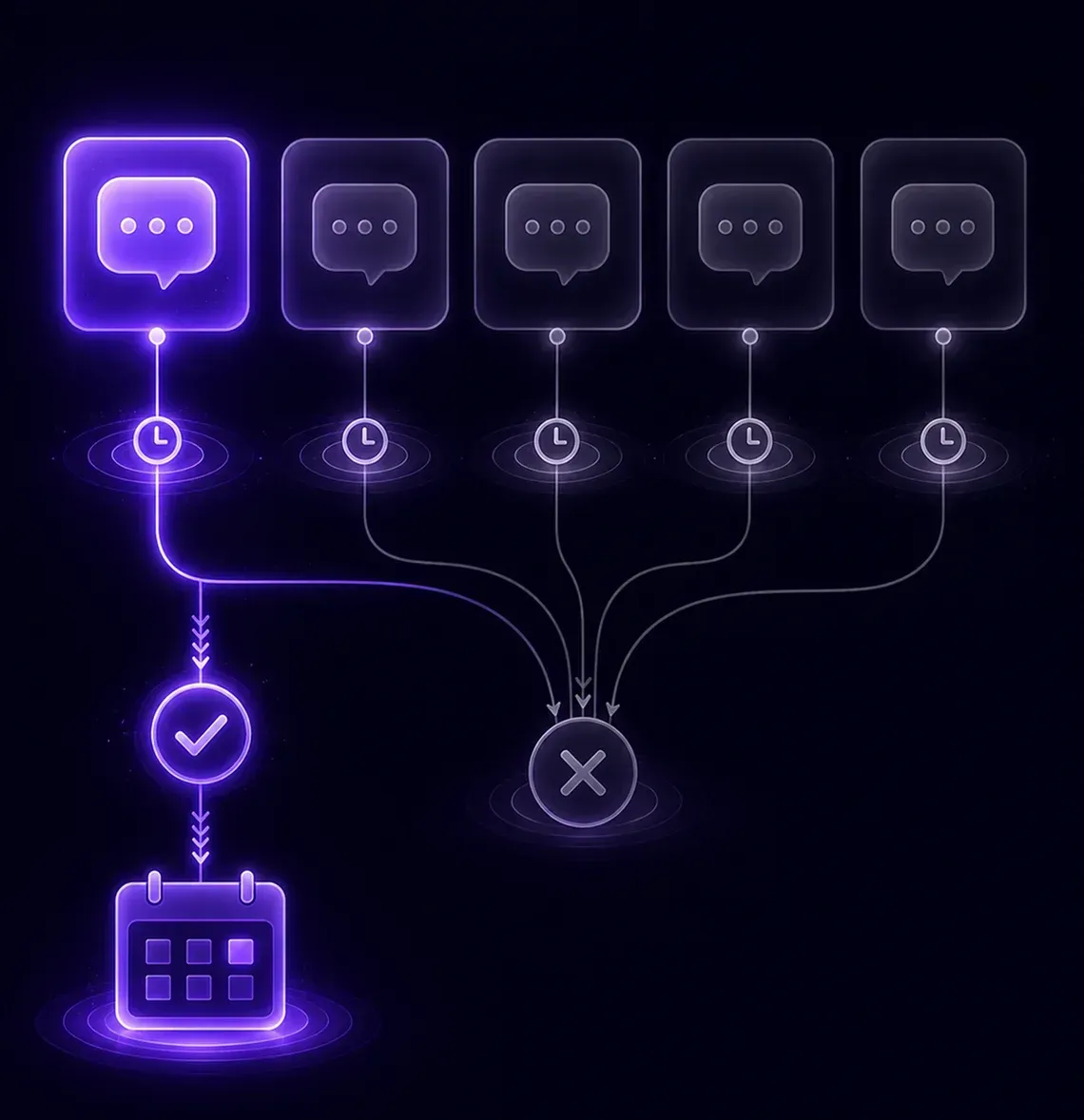
A prospect who requests a quote online usually contacts more than one agency. An AI appointment setter for insurance replies to that request in seconds, asks the qualifying questions for auto, home, life or commercial coverage, and books the call with a licensed agent. The value here is speed: the agency that answers first usually gets the conversation.
4. Tracking renewals and cross-sell opportunities
An insurance CRM with automation flags upcoming renewals, sends reminders before the deadline, and keeps cross-sell notes visible. AI features in agency management systems are moving in the same direction, mostly for servicing existing clients.
5. Following up on old quotes
Quotes that stalled and policies that lapsed sit in every agency database. A database reactivation campaign uses automated texts and emails to restart those conversations and book the ones that reply.
6. Research and training
Agents use AI assistants to explain unfamiliar coverage terms, compare carrier guidelines they have pasted in, and prepare for client meetings. Industry groups such as the Big "I" (Independent Insurance Agents & Brokers of America) now offer AI training for independent agencies.
There is no single best AI for insurance agents, because the tools do different jobs. Compare them by category first, then by brand.
| Type of tool | Best for | Not built for |
|---|
| General AI assistants (ChatGPT, Claude, Gemini) | Drafting, summarizing, research | Replying to leads or booking anything on their own |
|---|
| AI features in agency management systems | Servicing, renewals and back-office work for existing clients | The first message from a new prospect |
|---|
| Outbound voice AI and AI dialers | Calling large lead lists at volume | Agencies that want to avoid outbound consent and TCPA risk |
|---|
| Inbound AI appointment setters | Replying to quote requests in seconds and booking the call | Quoting, rating or binding a policy |
|---|
| Insurance CRMs with automation | Renewal reminders, pipelines, follow-up | Writing content or answering coverage questions |
|---|
Most agencies end up with two or three of these: an assistant for writing, a CRM for the book of business, and something that answers new leads fast. For a wider look at booking tools, see our comparison of AI appointment setter platforms.
Is There Free AI for Insurance Agents?
Yes, for some jobs. ChatGPT, Claude and Gemini all offer free tiers that handle drafting and summarizing well. Free tiers have usage limits and are usually not approved for client data, so treat them as writing tools, not systems of record.
Free options are rarer for lead response and booking, because those tools have to run around the clock and connect to your calendar and inbox. Our guide to free AI appointment setter tools covers what the free plans do and where they stop.
Will AI Replace Insurance Agents?
Not the licensed part of the job. Selling, soliciting and negotiating insurance generally requires a state license, and clients still want a person to explain coverage and stand behind the advice. What AI replaces is the administrative load around that work: first replies, intake questions, reminders, notes and drafts.
The practical risk is not that AI replaces agents. It is that an agency answering quote requests in seconds wins business from one that answers the next morning. The comparison of AI and human appointment setters walks through where each one fits.
Rules to Know Before You Use AI in an Agency
This is general information, not legal advice. Have your compliance lead review any tool before it touches client data or contacts prospects.
- Client privacy. Insurance client data is covered by privacy rules such as the Gramm-Leach-Bliley Act and state insurance privacy laws. Do not paste names, policy numbers, Social Security numbers or health details into a consumer AI tool your agency has not approved.
- Calls and texts. The Telephone Consumer Protection Act (TCPA) restricts automated calls and texts without consent. In February 2024 the FCC confirmed that calls using AI-generated voices count as artificial voice calls under the TCPA, so outbound voice AI needs consent like any other robocall.
- Opt-outs. When a contact asks to stop receiving messages, the messages must stop. Check how any texting tool handles that.
- Licensing. Keep quoting, coverage advice and binding with licensed agents. AI tools should hand those conversations to a person.
Inbound-only tools, which reply only to people who contacted the agency first, avoid most outbound calling risk. They do not remove every rule, which is why the review step matters.
Questions to Ask Any AI Vendor
Use these with any AI tool that will talk to your prospects. Ask for the answers in writing.
| Ask | A good answer | A red flag |
|---|
| Does it contact people who never reached out? | No, it only replies to inbound leads | Cold outreach lists or AI voice dialing by default |
|---|
| Does it ever quote, advise on coverage or bind? | No, it books a licensed agent for that | The bot gives prices or coverage recommendations |
|---|
| How are opt-outs handled? | A STOP reply ends messages right away | No clear answer |
|---|
| What happens when it cannot answer? | Hands the full conversation to your team | Loops, or leaves the lead waiting |
|---|
| What does it cost at my lead volume? | One flat monthly number | Per-minute or per-lead pricing with no cap |
|---|
| Where does the conversation end up? | In the lead's CRM record, visible to your team | Locked inside the bot |
|---|
How to Get Started
- Pick one problem that costs you money. Slow replies to new quote requests and missed renewals are the two most common.
- Measure it first. How long does a new lead wait for a first reply today? How many renewals come up each month without a touch?
- Choose the tool built for that job. Use the table above, and ask vendors the hard questions in writing: does it contact people who never reached out, does it ever quote or bind, and what does it cost at your volume.
- Check it with compliance before it touches client data or sends a message.
- Review after 30 days. Compare first-reply time and booked calls against your starting numbers.
Frequently Asked Questions
How can insurance agents use AI?
For drafting emails and posts, summarizing calls, answering new quote requests and booking calls, tracking renewals, following up on old quotes, and research. The licensed work of advising, quoting and binding stays with the agent.
What is the best AI for insurance agencies?
It depends on the job. A general assistant for writing, a CRM for renewals, and an inbound appointment setter for new leads cover most agencies. Compare tools by category before comparing brands.
Can AI answer insurance leads for me?
Yes. An inbound AI appointment setter replies to quote requests by text, chat or social message within seconds, asks the qualifying questions, and books a call with a licensed agent. See how it works on our AI appointment setter for insurance page.
Is it safe to put client information into ChatGPT?
Not into a consumer account your agency has not approved. Client data is covered by privacy rules, so use tools your agency has reviewed for that purpose and keep personal details out of free AI tools.
Will AI replace insurance sales agents?
No. It replaces administrative work around the sale. Selling and advising on insurance generally requires a license and a person clients trust.

 AI Tools