Is Database Reactivation Better Than Finding New Customers?
Is Database Reactivation Better Than Finding New Customers?
The answer most service business owners don't want to hear — because it means the growth they're chasing was sitting in their CRM the whole time.
I want to tell you about an HVAC company in the Phoenix area.
They were spending $4,000 a month on Google Ads. Every quarter, we would look at the numbers together, and every quarter, the story was the same: leads were getting more expensive. Cost per lead had climbed from $45 to $110 over 18 months. The owner was frustrated. He kept asking what he was doing wrong with the ads.
He wasn't doing anything wrong with the ads. He was doing something wrong before the ads.
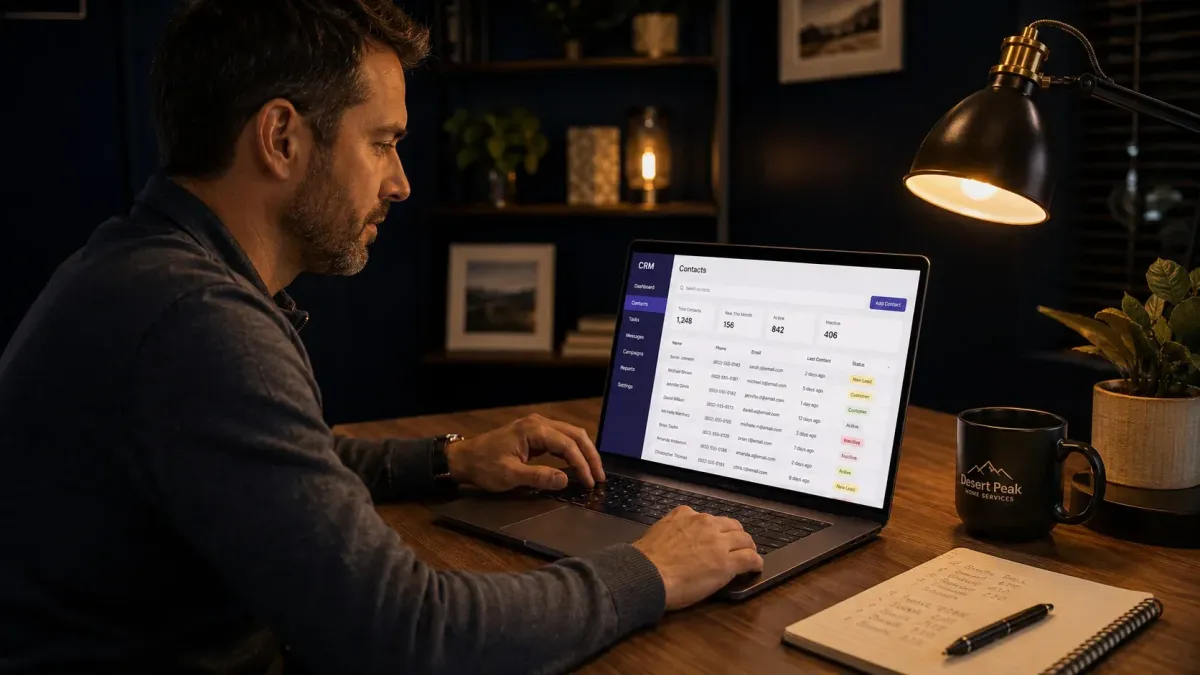
We pulled up his CRM. 340 contacts. Unconverted estimates. Past customers. People who had called, gotten a quote, and never booked. And the last time anyone reached out to a single one of them?
Never. Not once.
Over seven months, this business had spent roughly $28,000 buying new leads while 340 warm contacts sat completely untouched. People who already knew the company. Already trusted the name. Already had the exact problem they solve.
That's when the real question came up. Not "how do I fix my ads?" but something harder: is what I've been doing actually the right strategy at all?
TL;DR: Database reactivation almost always delivers a better return than new customer acquisition for local service businesses. Your existing contacts already know and trust you, which means you've already paid the most expensive part of the sales process. Reactivating them costs a fraction of what acquiring a new lead costs, and the results come faster.
Why New Leads Feel Like Progress (But Often Aren't)
There's something about a new lead that feels like momentum. A fresh name in the pipeline, a new face, a new shot at revenue. I get it. It feels like growth.
But that feeling is costing most service businesses thousands of dollars a month.
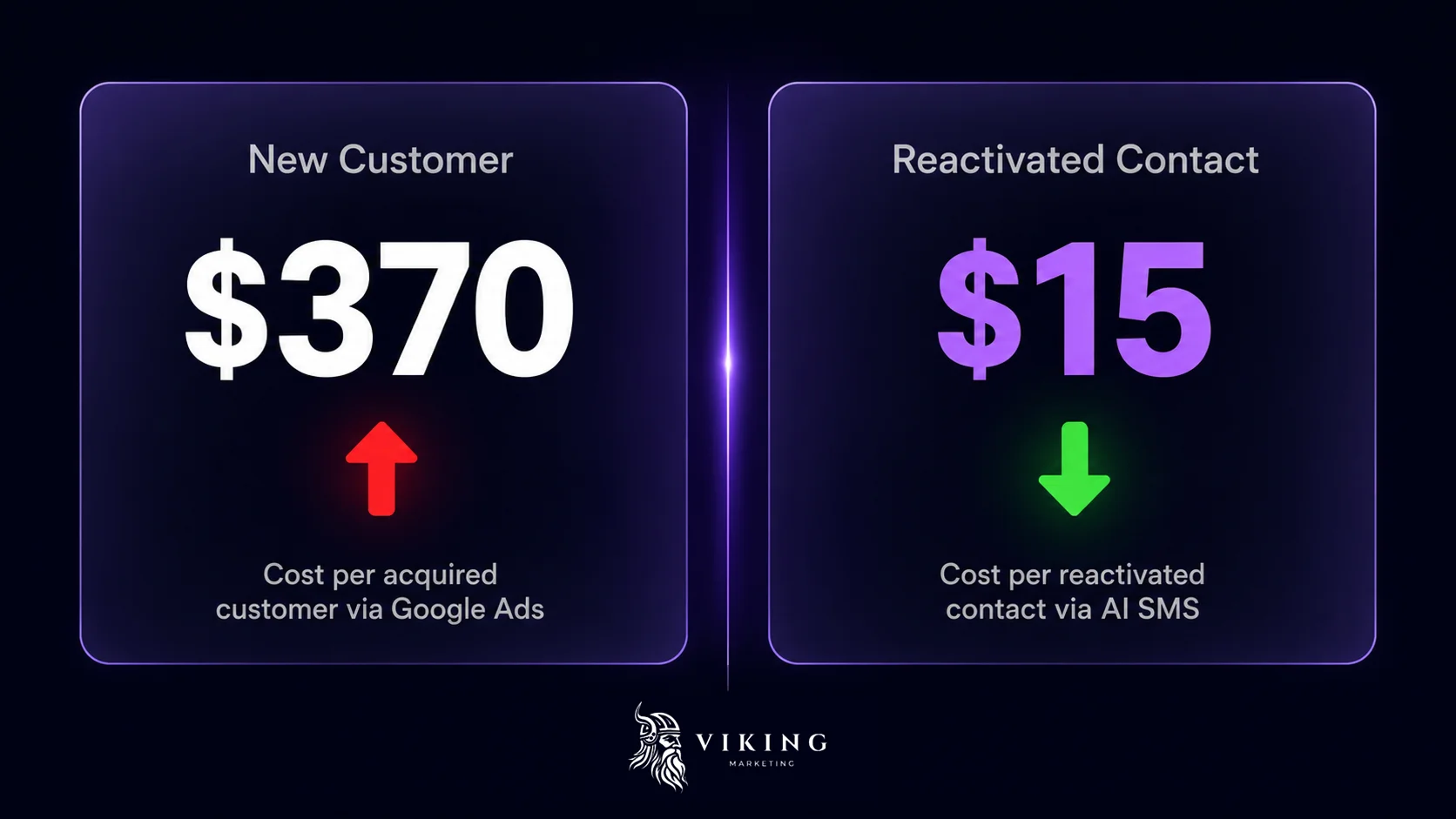
Here's the math no one wants to run. If you're paying $110 per lead on Google Ads and you close 30% of those leads, your real cost per acquired customer is closer to $370. That's what you're actually spending to bring one new paying customer through the door.
Now look at your CRM. Every single person in there already cost you that $370. You already paid to earn their attention. You already built enough trust that they called you, requested a quote, or became a customer. That investment doesn't disappear just because they went quiet.
Reactivating one of those contacts with an AI-driven SMS sequence costs somewhere around $15 in platform usage. Same customer. Same trust. Fraction of the price.
You're not choosing between new customers and old leads. You're choosing between paying $370 for a customer or $15 for the same customer.
What Does "Database Reactivation" Actually Mean?
Database reactivation is the process of reaching back out to contacts who already exist in your CRM but have gone quiet. Past customers who haven't booked again. Leads who requested a quote but never converted. People who reached out once and then disappeared.
An AI-powered reactivation system sends a sequence of messages to those contacts, typically across SMS and email, personalizes the outreach based on where they left off, and handles every reply automatically. When someone responds, the system qualifies them and either books the appointment or hands the conversation to a human.
The key difference from a generic email blast: it doesn't feel like a blast. It feels like a follow-up from someone who remembered them.
And if you're worried about replies coming in faster than your team can handle them — that's actually the problem we built the all-in-one inbox to solve. Every SMS, email, Facebook message, and web chat lands in one place, so no reactivated contact slips through a crack in a disconnected inbox.
The Trust Factor That Changes Everything
Here's the frame that hits harder than any statistic.
New customers don't trust you yet. Old contacts already do.
Trust is the most expensive thing to build in any service business. Think about everything that goes into earning it from a stranger. The ad they had to see. The website they had to visit. The reviews they had to read. The call they had to make. The quote they had to receive. That entire sequence, from stranger to someone who considers paying you, costs time, budget, and repetition.
You've already done all of that with every person in your database. They called you. They hired you. They liked your work enough to save your number. That trust doesn't expire. It goes dormant.
When you contact a past customer, you're not starting from zero. You're picking up a conversation that was already in motion. That's a fundamentally different sales dynamic than cold acquisition, and most local service businesses completely underestimate how powerful that is.
If you want to go deeper on why dormant contacts come back, we covered the psychology behind it in Do Old Leads Come Back? The Truth About Reactivating a Dead List.
The HVAC Story, Finished
So what happened when we ran the reactivation campaign for that Phoenix HVAC company?
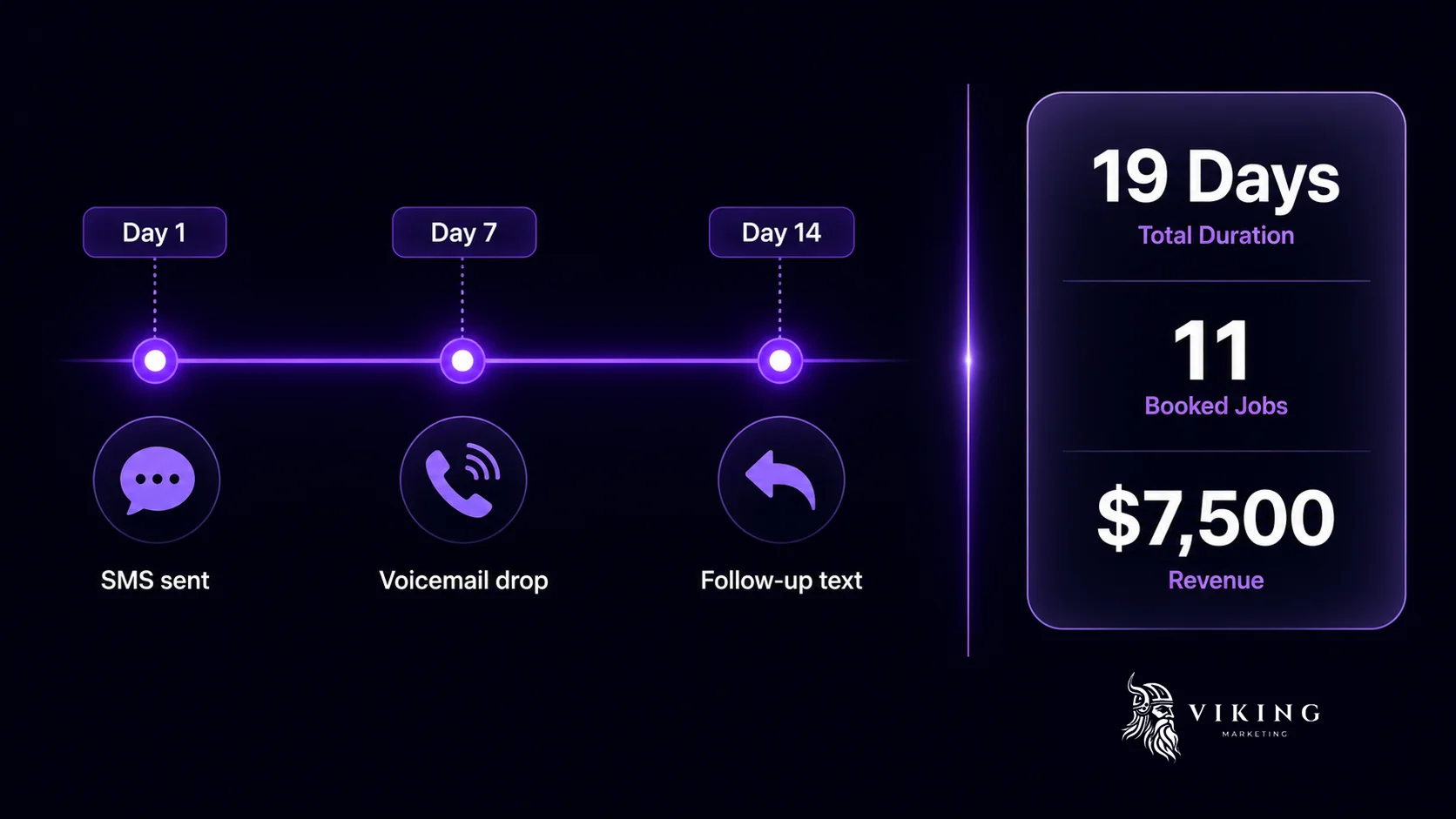
Three touches. One SMS, one voicemail drop, one follow-up text. The AI handled every reply. We ran it over 19 days.
Eleven booked jobs. Average ticket around $680. Roughly $7,500 in revenue from a list they'd written off. No ad spend. No new creative. No campaign setup beyond what was already built into the platform.
The thing that stung the owner most wasn't even the missed revenue. It was realizing he'd been competing against himself. He was bidding on Google Ads to reach people who were already in his database. Paying full price to reacquire customers he already owned.
That moment of recognition, when a business owner sees that clearly for the first time, is something I've watched happen more times than I can count. And it's never negligence that put them there. Just misdirected attention. New leads feel like progress. Old contacts feel like cleanup.
That instinct is costing service businesses thousands every single month.
Is Reactivation Better Than Finding New Customers?
For most local service businesses, yes. But the honest answer is that it shouldn't be either/or.
Reactivation wins on cost, speed, and conversion rate. You're contacting warm contacts with existing trust, at a fraction of the acquisition cost, and you're doing it with automation that runs while you sleep. If you have 200 or more contacts in your CRM and you haven't run a reactivation campaign, that's almost certainly your highest-ROI move right now.
New customer acquisition still matters for long-term growth. You need fresh names entering the pipeline. But most service businesses have the ratio backwards. They pour budget into acquisition while their existing database collects dust.
The businesses that grow fastest aren't the ones spending the most on ads. They're the ones who figured out how to squeeze full value out of every customer relationship they've already built.
One number to remember: it costs five times more to acquire a new customer than to reactivate an existing one. That's not a Viking Marketing statistic. That's documented across industries. But the way it lands for a local service business owner is simpler than any research paper.
Why are you paying full price for something you already own?
How Viking Marketing Handles Database Reactivation
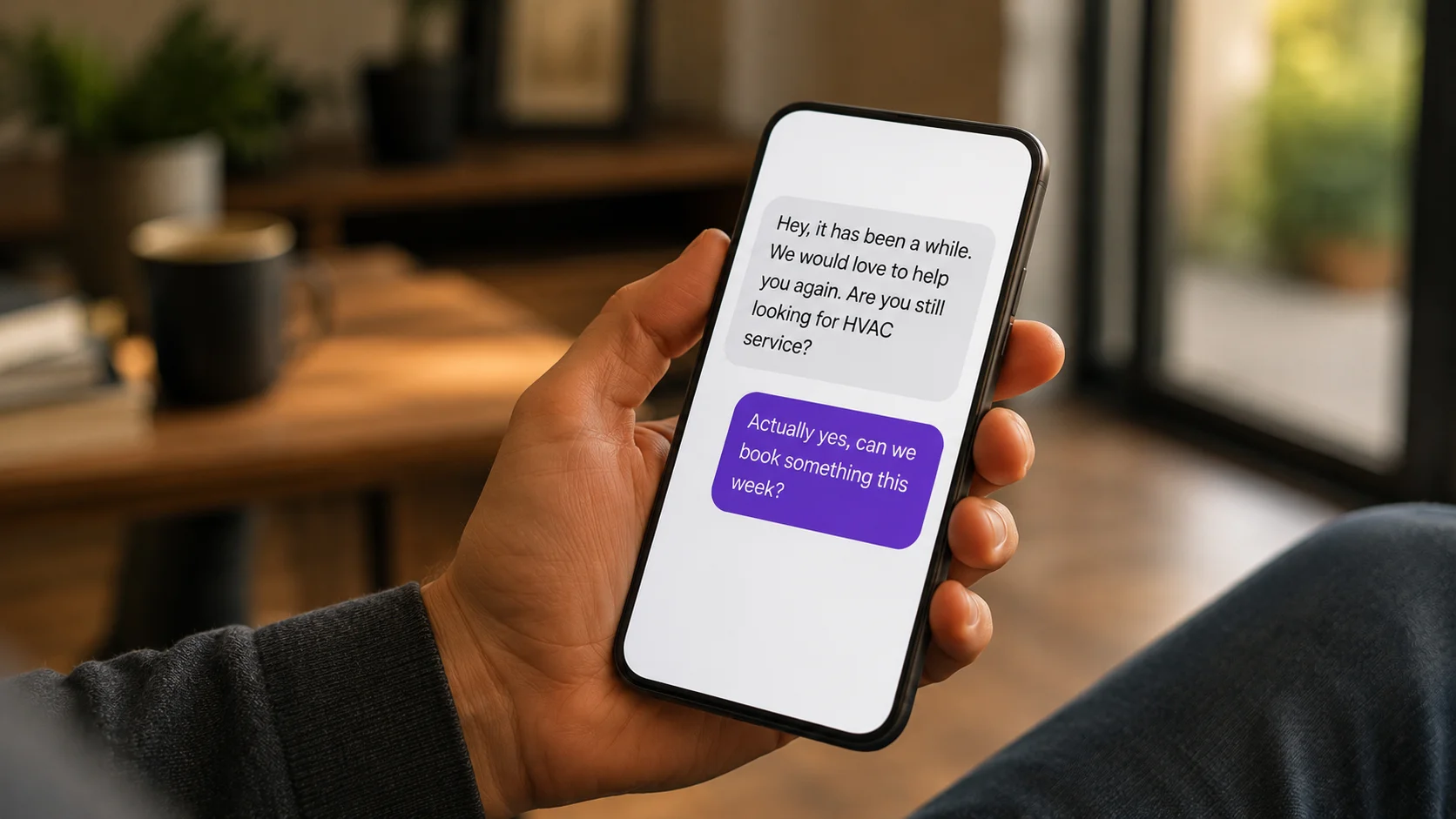
Viking's database reactivation tool is built specifically for local service businesses. You upload your existing contacts, the AI segments them by status, and it sends a personalized sequence by SMS, with follow-up handled automatically.
Every reply gets managed in the all-in-one inbox, so your team sees every conversation in one place. When a contact is ready to book, the AI routes them directly to your calendar. When a conversation needs a human touch, it flags it and hands off.
And if a call comes in while the campaign is running? Viking's AI Appointment Setter answers it in under 60 seconds, qualifies the lead, and books them straight to your calendar — so you're capturing new contacts at the same time you're reactivating old ones.
Most businesses running reactivation campaigns through Viking see their first booked appointments within the first week. Setup takes less time than a single Google Ads campaign. And unlike paid ads, the results don't stop the moment you pause the spend.
Want to see what this looks like for your specific business? Book a free 15-minute call with the Viking team and we'll walk through your database together.
Key Facts
Reactivating an existing customer costs up to five times less than acquiring a new one across most service industries.
The average local service business misses 27% of inbound calls, meaning many CRM contacts were never properly followed up with in the first place.
An AI-driven SMS reactivation sequence typically costs around $15 in platform usage per contact touched, compared to $100 or more per new lead from paid search.
Trust built during a previous customer relationship doesn't disappear when someone goes quiet — dormant contacts convert at meaningfully higher rates than cold leads.
Most businesses running their first reactivation campaign through an AI platform see booked appointments within the first 7 to 19 days.
The contacts in your CRM represent budget you've already spent. Ignoring them means paying again to reach the same people through new acquisition channels.
Viking Marketing's database reactivation tool segments contacts automatically and manages every reply through a unified inbox, so no conversation gets lost.
Frequently Asked Questions
What is database reactivation for local service businesses? Database reactivation is the process of reaching back out to existing contacts in your CRM who have gone quiet — past customers, unconverted leads, or people who requested quotes but never booked. An AI-driven system sends personalized SMS or email sequences to those contacts, handles replies automatically, and books appointments directly to your calendar. It's one of the fastest ways to generate revenue from assets you already own.
Is it worth reactivating old leads who didn't convert the first time? Yes, in most cases. People who didn't convert initially often weren't ready at that moment, not uninterested forever. Their circumstances change, their needs come back around, and timing shifts. Because they already know your business, they require far less convincing than a cold prospect, which means reactivation campaigns often convert at a higher rate than new lead campaigns at a lower cost.
How much does a database reactivation campaign cost compared to Google Ads? A Google Ads campaign for a local service business typically produces leads at $80 to $150 each, with a real cost per acquired customer often exceeding $300 once you factor in close rates. An AI-driven reactivation sequence costs a fraction of that per contact touched, with no creative production, no bidding, and no ongoing ad spend to maintain results.
How long does it take to see results from a database reactivation campaign? Most businesses running their first reactivation campaign see booked appointments within the first one to three weeks. Campaigns that include a clear offer or reason to reconnect, with a follow-up sequence of two to three touches, tend to produce the fastest results.
Why do old customers respond to reactivation messages? Because the relationship already exists. A message from a business they've worked with before doesn't feel like cold outreach — it feels like a check-in from someone who remembered them. That existing trust dramatically lowers the friction of re-engagement compared to reaching out to someone who's never heard of you.